
OUR CARE MODEL

The next model of care, evolved over two decades

The signs of an avoidable admission appear at home days before anyone sees them in a clinic. Our care model is designed for those days in between visits and keeps people healthy and stable at home.

The clinical engine behind continuous care

Continuous primary care means patients have a care team that knows how they are doing at home, and clinicians see changes earlier and can act on them.

Powered by daily data from home

Readings from the patient’s home join claims, pharmacy, and chart data in one record of how they are doing.

Guided by models that rank risk

Models trained on real outcomes flag early changes and show clinicians which patients need attention next.

Delivered by clinicians who act

Licensed clinicians prescribe, adjust treatment, order, and refer, then follow each step through to a result.

What continuous care delivers

$ 0

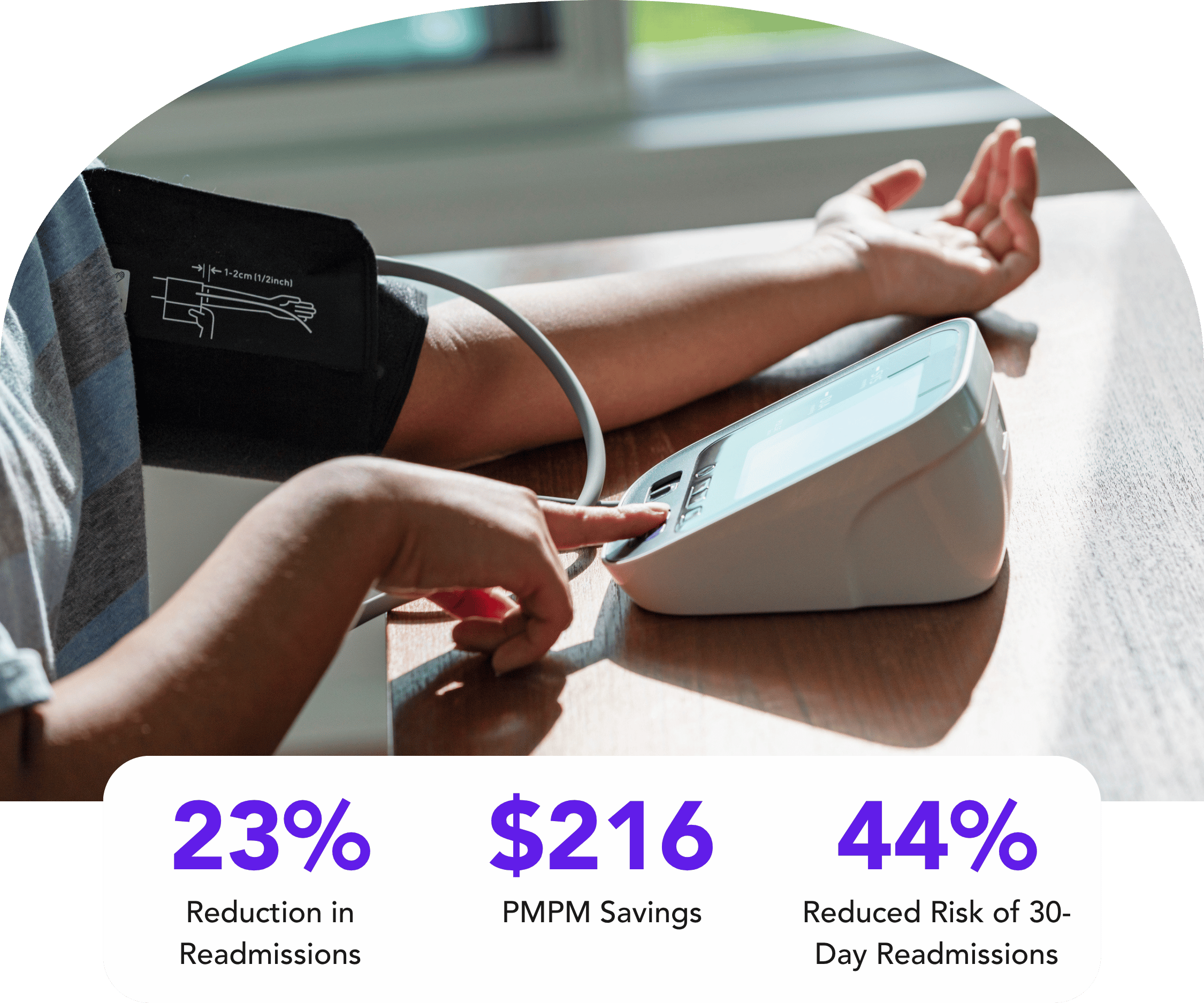
PMPM Savings, Medicaid Heart Failure Study

0 %

Reduced Risk of 30-Day Readmissions

0 %

Blood Pressure Control Sustained at 18 Months

0 pts

Lower HbA1c on Average

Connected however a patient lives

 Patients connect via smartphone app, cellular tablet, cellular modem, or phone call, so daily readings don’t depend on home internet, a smartphone, or comfort with technology. We match each patient to the option that fits how they live.

Clinical judgment stays with clinicians

Models rank risk and show clinicians who needs attention next. The decisions stay with licensed clinicians, and AMC’s clinical leadership governs the models they use, from validation before use to monitoring afterward.

Alongside the physicians patients already have

 Our clinicians work with a patient’s own physician, and when the two disagree, the physician’s plan governs. Where a patient has no primary care provider, we become theirs. Every visit, order, and result is documented in one record.

PEER-REVIEWED STUDY

Fewer heart failure admissions, lower cost of care, 3.3x return

Geisinger Health Plan added AMC Health home monitoring to the case management it already ran for Medicare Advantage members with heart failure. Over five years of claims data, enrolled members were admitted less often, readmitted less often, and cost the plan 11% less. Published in Population Health Management.